The Bible does not expressly forbid or encourage burning sage, nor does Scripture explicitly mention it. Simply burning the stick’s tip and wave in the air to clear the air is not a sin. We put no ritual religious significance on purifying the air with Sage or any other herbs used for healing purposes. Sage is very effective for this task. Rabbis and Jewish Sages have said that burning sage is beneficial to health and the home.
Burning sage, or smudging, is an ancient ritual used that some groups and native peoples worldwide practice. Today, even among ordinary everyday individuals, burning herbs like sage is the same as burning incense is popular for the aroma experience, and cleansing for the health benefits.
Smudging in Hebrew the word is מריחה which means application to cover and redeem. Also means to stamp out, to smear, to reverse, and to smell. The root word is shared with name Miriam מרי means to push against. It also has the root word ריחה to smell, specifically to have a good sense of smell, divine smell meaning from G-d’s Spirit רוּחַ, His breath, the Ruach רוּחַ. So, no its not a new Agey word or exclusive!
Smudging or burning has been well established as a Native American cultural or tribal practice, although it isn’t practiced by all groups of tribes. Native Americans will tell you that burning sage is cleansing of the air and it brings good health as well as tranquility and peace to the home or space at the same time by helping a person to relax by getting rid of negative thoughts and energy.
However, Rebbetzin Chana Bracha Siegelbaum the Director of Midreshet B’erot Bat Ayin says “Rather, it seems to me, that you can certainly smudge sage without any of those intentions, the same way that you can use general and alternative medicine, as long as you keep in mind that Hashem is the ultimate healer.
Just as medicine must never be regarded as the source of our healing, so may we use herbs, provided that we refrain from attributing independent powers to the herbs, recalling that they are only means that Hashem has granted us to receive healing and a peaceful environment.” I agree these plants are G-d’s creation made to be tools in which we can use to assist us in healing and for preventative care.
From a Torah view, a remedy for healing, whether physical or spiritual, without a source in the Torah, must be הֶסֻּנְמוּ קוּדָבּ/baduk u’menuse – ‘verified effective’ to be considered sound and excluded from any kind of sorcery. The practice of herbal smudging has long been discarded as superstition, until recent times, when its virtue has been proven by the scientific community. many scientific Articles and Papers have proven the benefits of sage and other herbs smudging may be purifying and cleansing since it contains both antimicrobial and antibacterial properties.
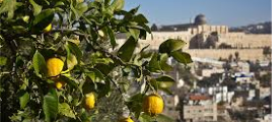
As with many foods in Israel, Jerusalem Sage might be viewed as an ambassador from one culture to another. Arab and Israeli Chefs use the large, tongue-shaped, basal leaves in a manner similar to the stuffed grape leaves of Greek and Middle Eastern countries, such as Iraq. The leaves are soaked in olive oil and wrapped around combinations of rice, vegetables, and meat.
Jerusalem Sage and traditional White Sage leaves and other unique greens are sold at street markets called shuks in Israel that look much the same as ones at an American and European farmers’ market. The leaves are also added to soups and stews.
These sticks and bundles herbs that we have in our incense shop are carefully dried and hand-tied and bundled for burning beneficial purposes. Incense was the original Aromatherapy practice of all Nations and Peoples. We Jews have the most famous incense that was burned in our Holy Temple. Burning Herbs and Spices in the Bible
Burning incense is first mentioned in the Bible when God instructed Moses to prepare a specific blend of spices and herbs and burn them as a holy and perpetual incense offering to the Lord (Exodus 30:8-9, 34-38). G-d expressly forbid using other mixtures of spices for worship purposes, but not forbidden for health benefits. Additionally, He forbade anyone to use the prescribed mixture of Ketoret in its raw form for any purpose other than worship. Only the priests could offer the Ketoret incense, which was made of grounded fine incense.
The burning of incense symbolized the prayers of G-d’s people going up before Him: Accept my prayer as incense offered to you, and my upraised hands as an evening offering. Psalm 141:2,
Common herbs were, in fact, used for Incense purposes, which was often only used to make homes smell good, which is no different than running an essential oil room diffuser today. It is the same as diffusing essential oils. In conclusion, burning Sage is found to have medicinal properties just as much as eating sage does. Great for relaxing, it is an air purifier, deodorizing, clears mucous, and also kills germs and bacteria. Using herbs in many different ways, like as incense, essential oils, hydrosol, tinctures, teas, etc, can be very beneficial to your health without breaking G-d’s Torah laws.
VISIT INCENSE SHOP
One should always avoid incense that is made specifically for idol worship which is 99% of what you will find today on the market. Most are natural material mixed with synthetic fragrances. Our incense blends are considered kosher to use. Made from Ingredients from Israel.
The rule is long as it is made from natural materials and natural botanical aroma. It is best to make your incense or have it specially made for you with carefully selected materials. This is why we chose to make our incense without having to deal with all the garbage out there on the market.
For a Natural botanical aromatic material, if one enjoys the aroma (even when made into incense), one is obliged to make a Bracha (Blessing). But for a synthetic chemical fragrance (including used in incense), one is forbidden to make a Bracha (Blessing).
That is just one of many reasons why we would never use synthetic fragrances. On a fragrance energetic level, that is the dividing line between holiness and profanity. We make our Natural all Organic incense so one can make a blessing over it and enjoy it. You can be worry-free of the idol stigma and negative energy attached to using incense because we make our incense with Kiddusha, Lishma, and Kavannah (holiness and complete concentration for use for mitzvah only). We can make also a custom-requested blend just tailored for you.
Our resins are all from Kosher Organic Sustainable and Fair Trade sources which are Holy Land Charged™. The heavy fragrant resins were placed in an Israeli-made clay jar in Israel for 18 days in a dry, cool place to absorb the energy of the Holy Land of ISRAEL and it is then packaged for market or distilled by traditional method in Israel for its lovely Essential oil. This process is what we call “Holy Land Charged” resin. This gives our resin higher energy and frequency for healing.