Asher is one of the children of Israel (Jacob) and one of the 12 tribes of Israel. His name means “Blessed/happy”.
BIBLICAL
Asher played a role in selling his brother Joseph into slavery. (Genesis 37:23-36) Asher and his four sons and daughter settled in Canaan. On his deathbed, Jacob blesses Asher by saying that “his bread shall be fat, and he shall yield royal dainties”(Genesis 49:20).
Moses blessed the tribe of Asher: “And of Asher he said, Let Asher be blessed with children; let him be acceptable to his brethren and let him dip his foot in (shemen) oil.” (Deuteronomy 33:24)
JEWISH TRADITION
The tribe of Asher was the one most blessed with male children (Sifre, l.c.); and its women were so beautiful that priests and princes sought them in marriage (Gen. R. lxxi., end). Asher’s daughters were also remarkable mothers. With their modesty and integrity, they transmitted a firm sense of commitment to their children: the unspoken message of one who values G‑d’s impression more than the social impression, and the beauty in maintaining appropriate boundaries.
These children were healthy, emotionally, and spiritually, fit to be high priests—each one of them. Although the priests came from the tribe of Levi since Asher’s daughters married priests, his grandchildren were eligible for—and eventually served in—the position of the high priest. So although Asher’s tribe was not numerous, the children were of such exceptional quality that one child gave their parents as much nachas (satisfaction) as many children combined.
There is a sort of beauty that runs skin deep, and there’s a beauty that reflects spiritual maturity and personal dignity. When the Torah extols the beauty of a Jewish woman, it is almost always speaking of her nobility and modesty. “The entire glory of the daughter of the king is her inwardness,” says King David regarding the modesty of the daughters of Israel. Her discreet conduct glorifies her, giving her an aura of aristocracy that emanates from her modesty.
The abundance of oil in the land possessed by Asher so enriched the tribe that none of them needed to hire a habitation (Gen. R. l.c.); and the soil was so fertile that in times of scarcity, and especially in the Sabbatical year, Asher provided all Israel with olive-oil (Sifre, l.c.; Men. 85b; Targ. Yer. on Deut. xxxiii. 24). The Asherites were also renowned for wisdom and Sages say that it was his olive oil that was used to light the wicks of the Holy Menorah in The Beis HaMikdash (The Holy Temple).
It is clear from the context that the oil in this passage is olive oil. The Hebrew word “shemen” is used 190 times in Torah texts for “generally olive oil whether pure or prepared for various uses as perfume or ointment” and is never used for petroleum oil. Interestingly, the early rabbinic writings understand it to mean olive oil as well.
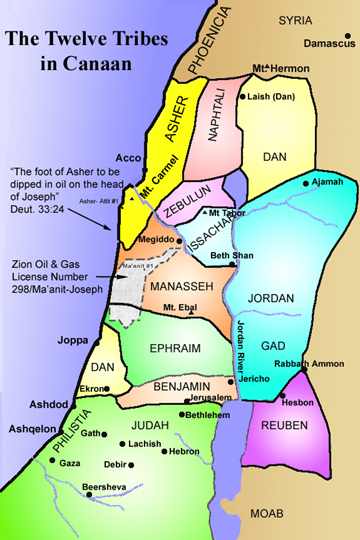
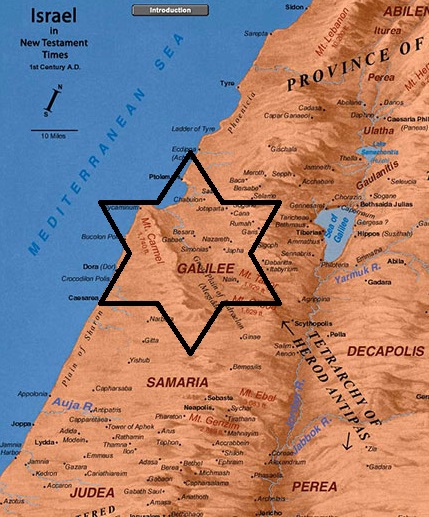
In the tractate Menahoth on regulations concerning the meal offering in the Temple, the rabbis taught, “And let him dip his foot in (oil) shemen: this refers to the territory of Asher which flowed with oil like a fountain” (Menahoth 85b). The context is talking about olive oil. The second issue is the location of the oil wells which consists of an oil press with a well beneath to catch the pressed oil. Many records and documents say that these oil wells were placed on Mount Carmel. Are these oil wells in Asher’s territory? Many Rabbinical sources imply that it was Asher’s territory. Even the Maps of the Twelve Tribes also agree using Biblical texts.
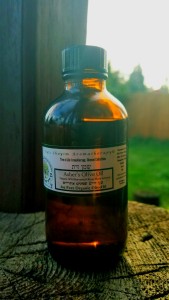
Asher’s Olive Oil
Mount Carmel region of Israel
Cold Pressed
Olea europaea
4oz Blue or Green bottle
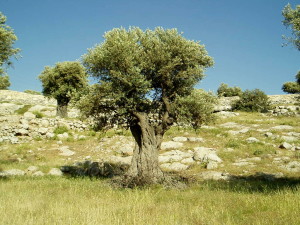
Grown in the foothills of Mt. Carmel Israel, the Holy Land, Olive Oil from Israel are products of the seeds sown more than 2,000 years ago. Health benefits are derived from monounsaturated fatty acids (MUFAs), which may help lower the risk of heart disease, lower total cholesterol, and aid in the maintenance of blood sugars.