The purpose of this blog is to rip away the Mullein plant from the New Agey people and the witches with their pagan practice that ruins this ancient plant’s purpose. G-d is the creator of all medicinal plants. Jewish people made use of those plants, especially if they grew in Eretz Yisrael.
Mullein, known scientifically as Verbascum thapsus, is not explicitly mentioned in the Bible. However, it has been used historically for its medicinal properties, particularly in ancient herbal medicine. The plant has a long history of use for respiratory ailments, which aligns with the healing practices of Biblical times. The pagan using this herb for their nonsense practices only goes back to the late Middle Ages, so let’s stop giving away G-d given healing, historical,and ancient herbs like this to the dark side!
Mullein is the plant that the Havdalah candle shape is possibly based on today. According to generations of Jewish women herbalists, it is definitely not a witch’s plant but a herbalist’s friend. Mullein stalks have been historically used as wicks for lamps and candles, which might explain their resemblance to the Havdalah candle. Both are tall and slender, making them visually similar in form.
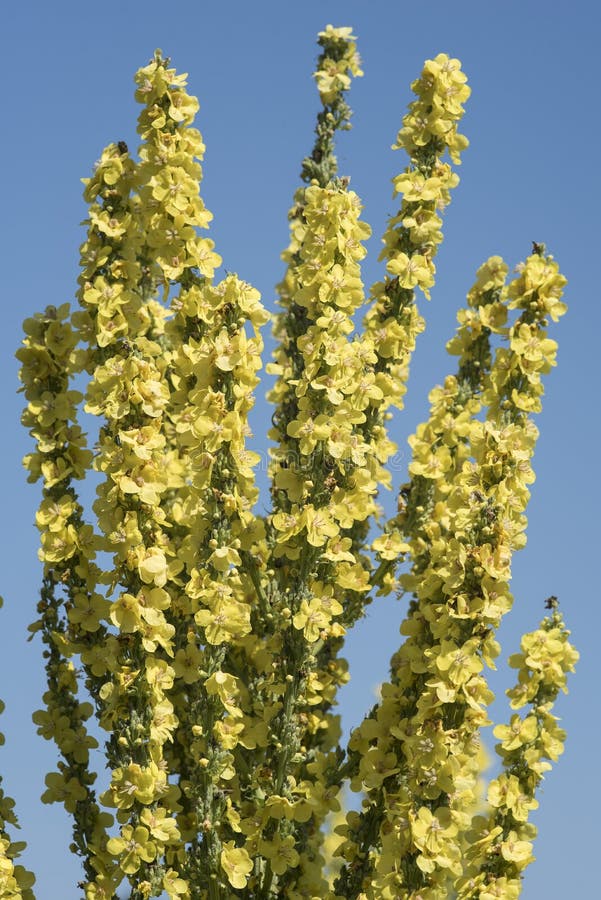
Not only does Mullein grow everywhere from Europe to the USA to the Middle East. Known by the Hebrew name בוצין/Butzin. When Mullein raises its tall Menorah-shaped branches bursting with yellow golden florets, it resembles the Temple Menorah, ie candelabrum, even more than the famous Menorah Sage plant, thanks to its beautiful, luminous yellow blossoms. Inspiration for the Biblical menorah described in Exodus (37:17-24)
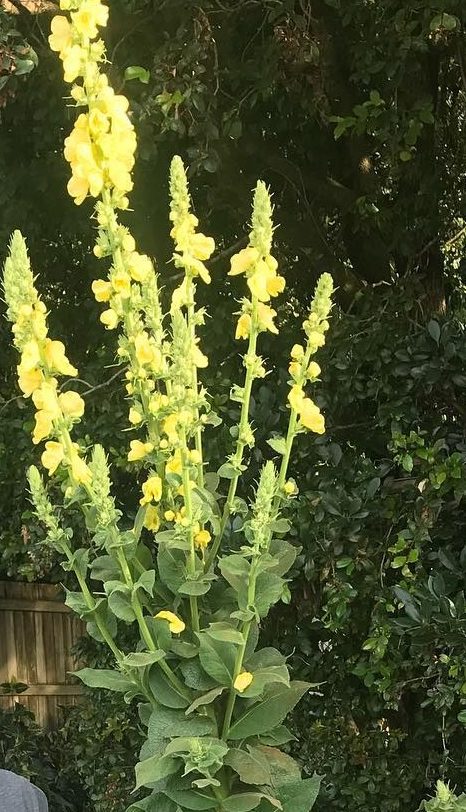
Menorah Shape Mullein
The menorah, a seven-branched candelabrum, is believed to have been inspired by certain species of salvia plants that grow in Israel, particularly the Jerusalem Sage (Salvia hierosolymitana) and others like Salvia pomifera. These plants, including the Mullein plant, have structural similarities to the Menorah and are thought to connect to ancient Judaic and Biblical history. It was not unusual to see Muullein Candles used stacked eight in a row to represent a Menorah across parts of Europe. Burning Mullein also was credited for preventing the black plague because when it may kill the bacterium Yersinia pestis.
Mullein grows all over Israel often known as the desert wick, and the Rambam explains the desert wick refers to a plant whose leaves and dried flowers left on the plant are used for lighting. This characterises the mullein plant, as its dried leaves are highly flammable and can be used as candlewicks or to ignite a fire quickly. Mullen candles not only brought light, but it brought many medicinal benefits to the home as well.
Mullein can grow on poor soil and in a desert environment. Mullein Israel grows in the Judean desert, Dead Sea valley, Ein Gedi region, the Northern Negev and in the Aravah, the desert wick that is mentioned in the Mishnah may refer to the Desert Mullein, after all, it is its nickname that it has been known by for centuries in Israel.
משנה מסכת שבת פרק ב משנה א
בַּמֶּה מַדְלִיקִין וּבַמֶּה אֵין מַדְלִיקִין. אֵין מַדְלִיקִין לֹא בְלֶכֶשׁ, וְלֹא בְחֹסֶן, וְלֹא בְכָלָךְ, וְלֹא בִפְתִילַת הָאִידָן, וְלֹא בִפְתִילַת הַמִּדְבָּר, וְלֹא בִירוֹקָה שֶׁעַל פְּנֵי הַמָּיִם
“With what may we kindle the bringing in of the Sabbath lights, and with what may we not kindle, what shall the wicks be made of and which oils may be used as fuel to burn these lights for bringing in Shabbat? We may not kindle them with lechesh, which may be the inner wool-like bark of a cedar tree, hosen the uncarded flax, chalach that is an inferior grade of silk, a wick of edan, which might also be the inner wool-like bark of a willow tree, but with desert wicks only (possibly the mullein plant)” ~Mishnah Shabbat 2:1
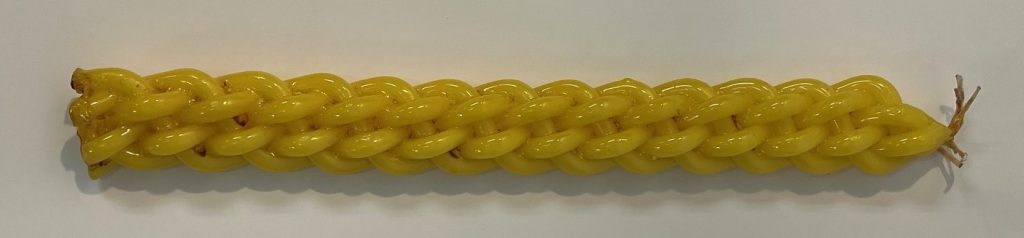
There is no mention of the Havdalla candle at the end of Shabbat. One might say the Mishnah texts are referring to all lights surrounding the Shabbat day. But yet look at the current Havdalla candle, how it resembles the mullein wick. Why is that?
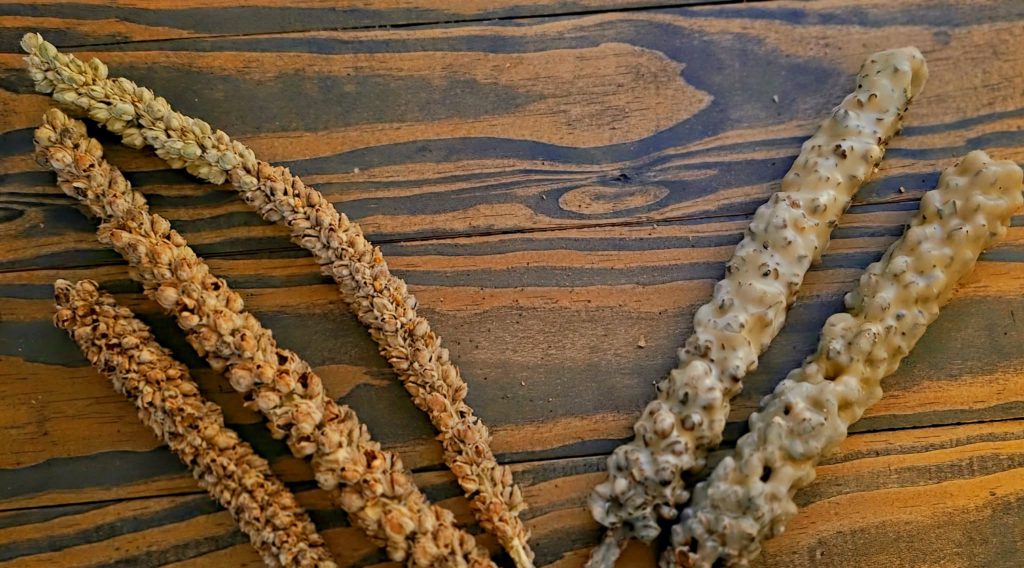
Dried Mullein left and right waxed dried Mullein candles
One answer may be that both mullein and candles symbolise light and guidance, making them significant in various cultural and spiritual contexts. Mullein’s tall stature and historical use as a wick create a visual and functional resemblance to the Havdalah candle, linking them through their roles in tradition and symbolism. And it’s a good reminder to stay humble because mullein candles were in fact a poor man’s torch and not used by the wealthy households in general.
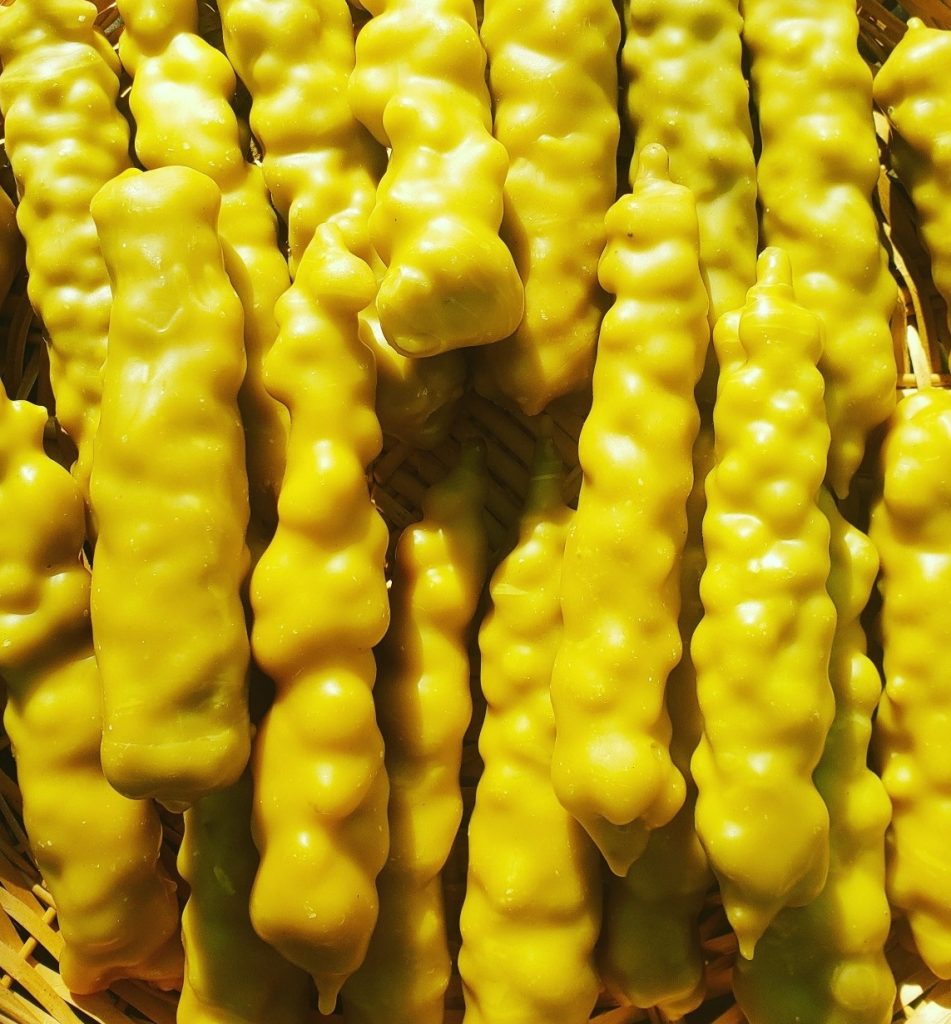
Beeswax Mullein candles
Mullein has been used in homes, churches, and synagogues across Europe for its protective purposes from respiratory illness, for many medicinal purposes, and for spiritual healing qualities. Mullein was considered one of the 23 important healing herbs in medieval Jewish medicine, very often used for its medicinal properties. Its leaves were traditionally boiled in milk as a remedy for tuberculosis.
For instance, in the Jewish tradition of Havdalah, candles symbolise the conclusion of Shabbat and help in transitioning into the new week with humility and dignity. This allows individuals to carry the light of Shabbat with them as a form of protection and healing throughout the new week. Mullein candles would last longer much being used on a weekly or daily basis, especially if one could not afford other types of candles that came with a hefty price tag.
Candles were made to burn like incense too in the home, with practical application to purify air, clear breathing issues, and could be beautiful too when flowers and other herbs were added to the wax process. Many apothecary shops across Israel and even in Europe would carry mullein candles for the sole purpose of medicinal uses and as a way to light up a room at the same time, and could be beautiful as well. They would come in all shapes and sizes and could be custom-made for one’s medicinal needs with other added herbs.
For Survival in the early part of the 20th century, when electricity was not always reliable, the mullein plant was a must-have in the garden as a medicinal and survival tool. Mullein flowers make great tea; however, the stalks were used for candles for light, and incense for illness prevention. It is often used for inner ear issues, hearing issues, ear pain, lung and chest inflammation.
Isaiah 30:21 And your ears shall hear a word behind you, saying, “This is the way, walk in it,” when you turn to the right or when you turn to the left.
Proverbs 20:12 The hearing ear and the seeing eye, Adonai your G-d has made them both.

So, imagine electricity going out, and you go into your survival drawer and pull out one of these long-lasting burning candles. Definitely worth having for these reasons. Whether you look to the Middle East or European traditions, you’ll find mullein known not only for its health-giving qualities but also for the light it brings into one’s life. Let’s put Mullein in the right light and perspective!.
Mullein oil is in our Ear Oil Product
Mullein may best be known as an expectorant, which means that it helps your lungs expel mucus and sputum. Most cough syrups work as expectorants. Expectorants are one type of mucoactive agent, and mullein seems to have properties of most of them.
Mullein not only helps expel mucus but also thins it, making it easier for your body to get rid of it. As a mucolytic, mullein can break down mucus, allowing for easier expulsion from the lungs. Additionally, it may help inhibit excessive mucus production.
Mullein may help with respiratory symptoms by acting as a demulcent, which soothes the mucous membranes. Mucus in the respiratory system plays a crucial role, protecting the sensitive tissues of the nose, throat, and lungs. When using expectorants alone, these mucous membranes can become vulnerable and irritated. Mullein helps to alleviate these symptoms effectively.
Mullein is used to reduce inflammation and can be ingested. It may help treat flu and respiratory ailments that cause inflammation in the lungs and mucous membranes. Mullein can also be applied topically to the skin.

See our Oxygen Blend
More to come on the Mullein plant….
HAPPY CHANUKAH!!!
.
Please Do Share and Like