Description
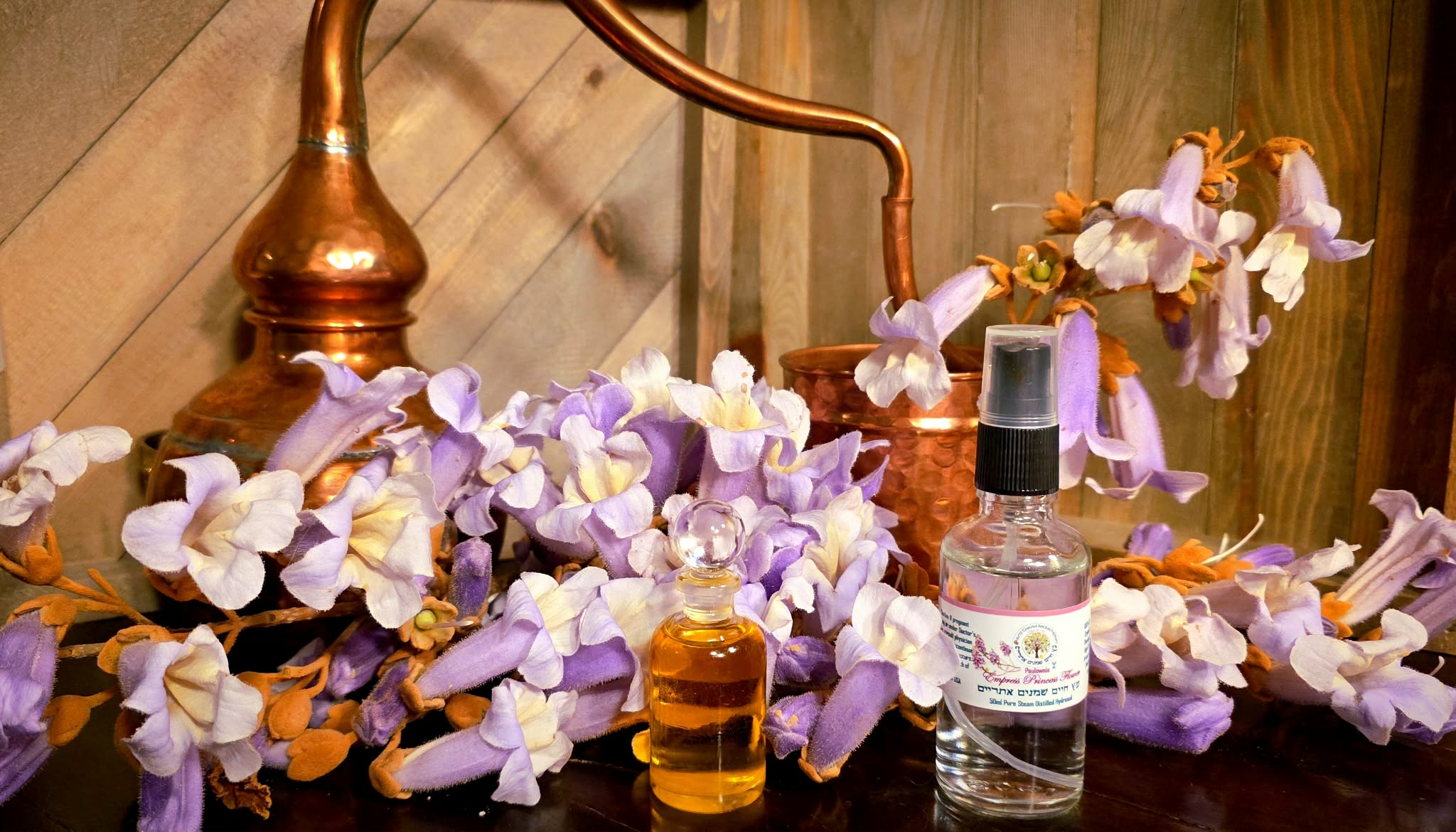
Empress Princess Tree Flower Essential Oil
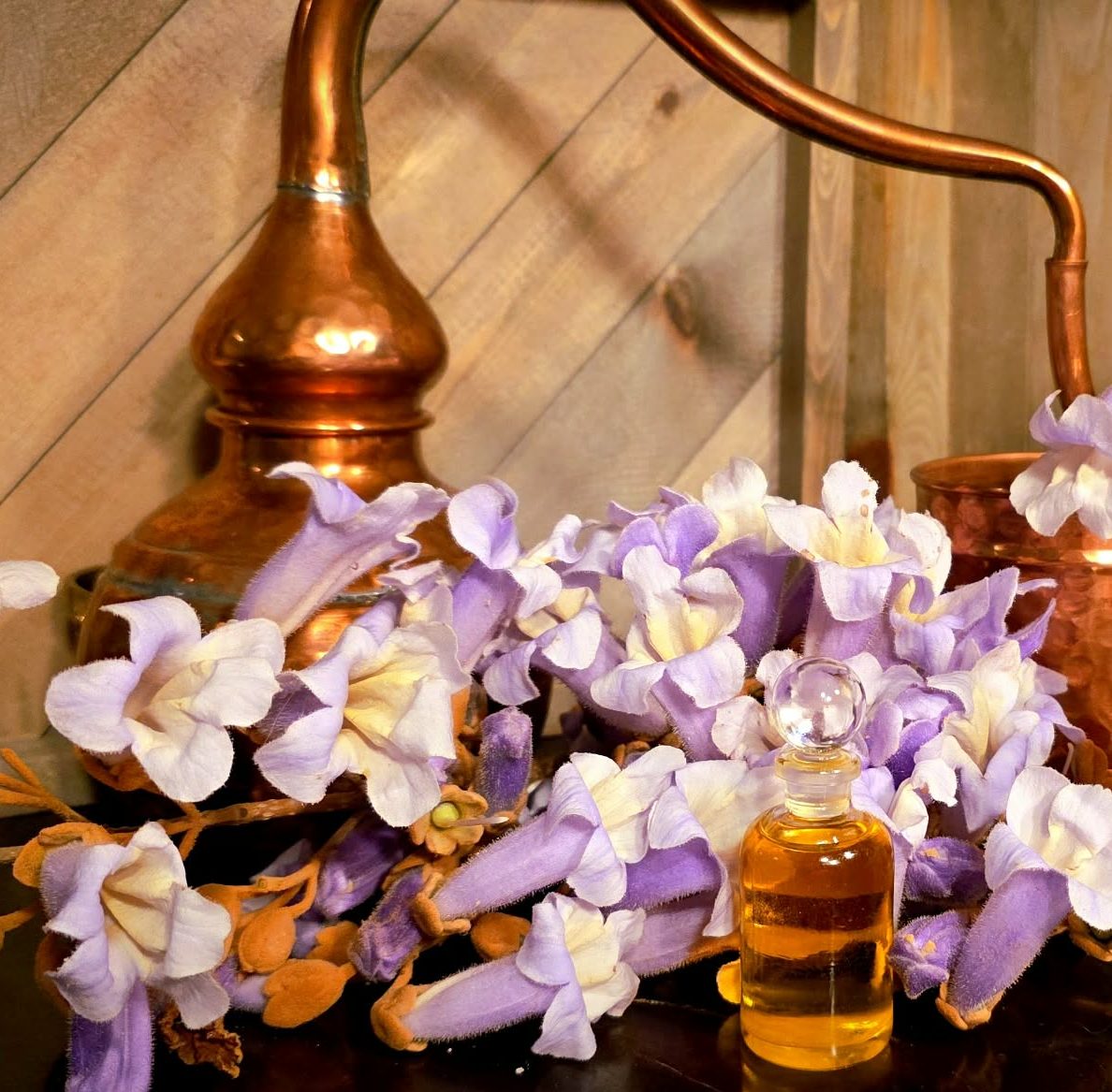
Known as Paulownia Shan tong flowers
2.5ml of oil poured into a 5ml bottle
Pulownia tomentosa
Artisan Distilled from flowers
Color is green, yellow to yellow-amber thin oil with a gorgeous aroma
EXTREMELY RARE
Aroma is strong vanilla note, tuberose or hyacinth-like buttery aroma slightly fruity, with a hint of green notes
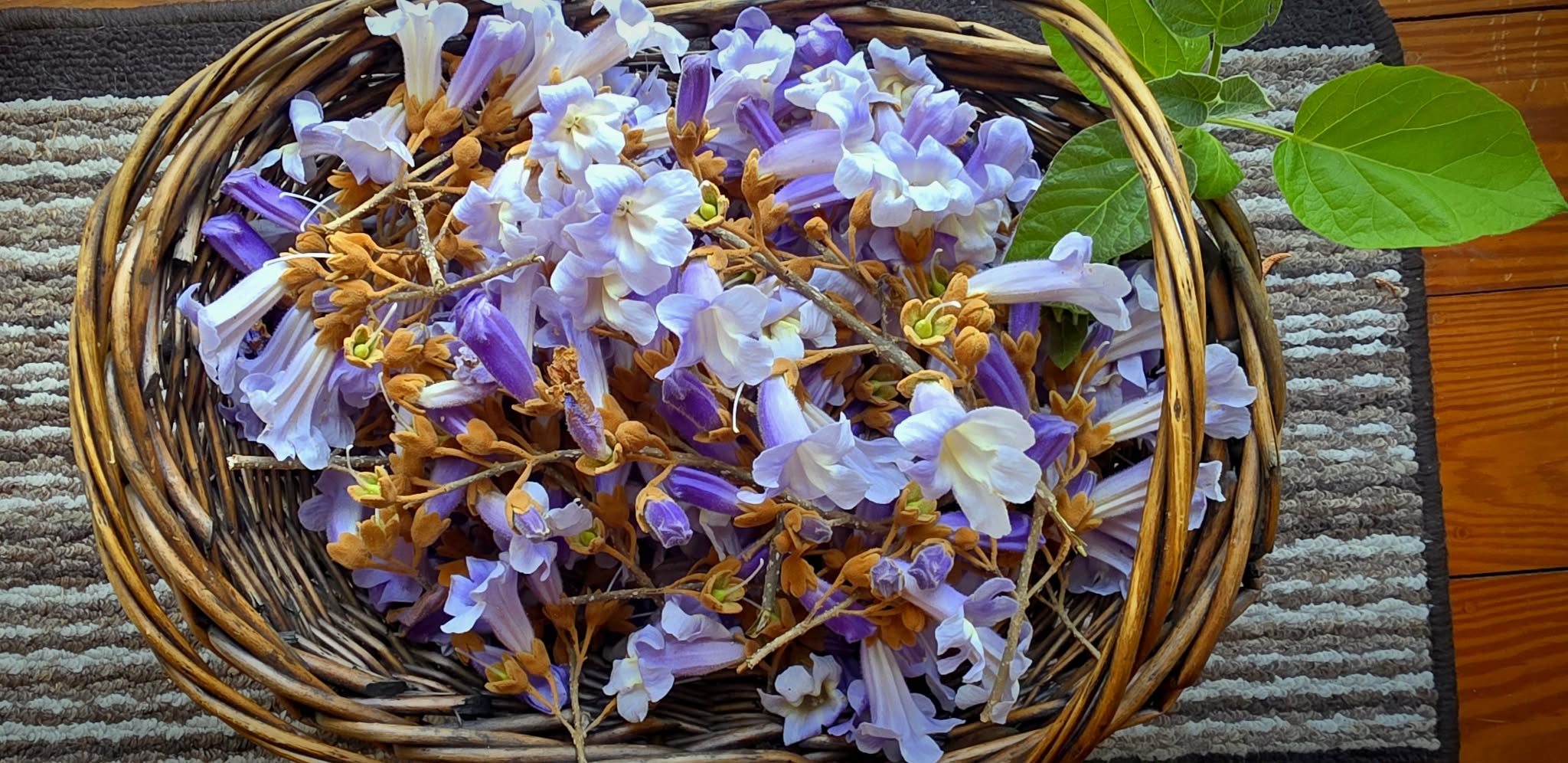
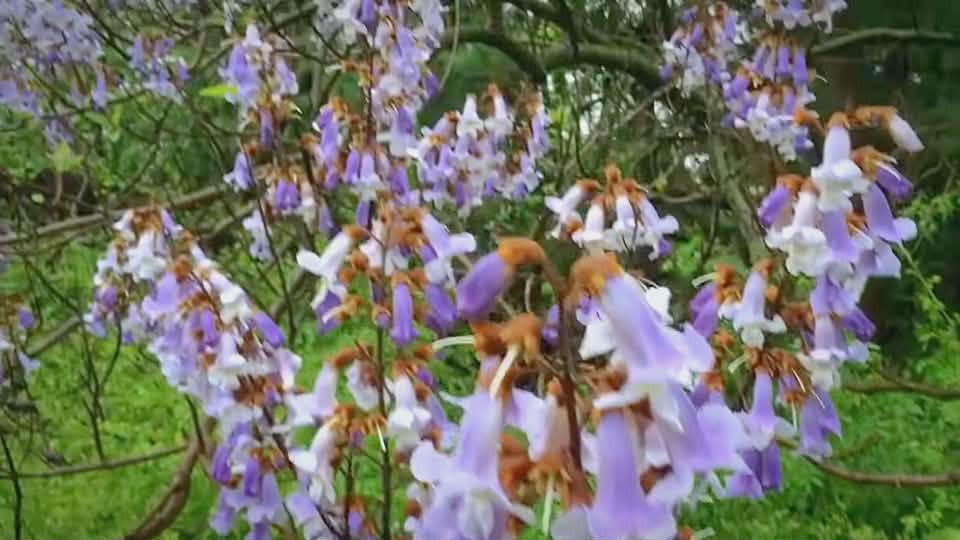
The princess tree blooms prolifically in early spring, producing 14-inch long panicles of lavender to pinkish-lavender trumpet-shaped flowers. These flowers have a sticky resin tip once plucked from tree. Amazing strong aroma!
The ingredients to create this enfleurage are simple flowers macerated into a fatty oil such as Coconut oil and babassu oil. The flowers are forged from our own land and Artisan handcrafted with love and care.
This oil blends well with Jasmine Abs, Honeysuckle, Gardenia, Bergamot, Grapefruit, Lemon, Neroli, Rose Otto, Sandalwood Mysore, Sweet Orange, Violet, & Ylang Ylang.
Thirty-one components were identified, with 3-acetoxy-7, 8-epoxylanostan-11-ol (38.16%), β-monoolein (14.4%), lycopene, 1,2-dihydro-1-hydroxy- (10.21%), and 9,12-octadecadienoic acid, 2-phenyl-1,3-dioxan-5-yl ester (9.21%) as main compounds.
The edible flowers emit a vanilla-type fragrance as described above. Often used on wedding cakes in Asia and the Middle Eastern regions of the world. Their large, heart-shaped, deep green leaves commonly grow to be between 8 and 12 inches long and sometimes the size of an umbrella. Paulownia tree wood is very valuable. It is commonly grown, harvested and shipped to Japan, where it is used to make furniture and jewelry boxes. It is also used to make wooden crates.
In the Middle East such as Israel, Lebanon, and Syria it is placed in some fruit orchards such as Almond, Citron, or Orange trees to maintain a healthy bee population because of enzymes in the pollen give bees healthy longevity in the hives. The flowers are often eaten in salads. The flowers are a favorite to add to honey and when strained it gives the honey that vanilla flavor.
There are legends among Asian and Middle Eastern cultures that this tree may have been in the Garden of Eden mainly because of the sheer size of its leaves. Some Jewish scholars translate the tree leaf used for Adam and Chava to cover themselves may have been a fig leaf because they can get quite large. However, some Rabbinical traditions state it was an unknown tree that had fragrant flowers and fig trees do not flower.
Some commentaries state it was this type of tree that stood beside the Tree of Life to shade it or hide it with its enormous leaves. It was said that Chava did not see the tree until she was called to the tree by the serpent. It was said that only Adam knew the Tree of Life was there in the garden because he personally tended to the Tree of Life’s botanical care and needs. The word in the text is תְּאֵן which is of uncertain derivation or origins but so often translated as fig leaf and used in modern Hebrew as fig. Really it was adopted as the meaning fig. It was definitely something special to be used as a covering.
Use small amounts it really goes a long way!