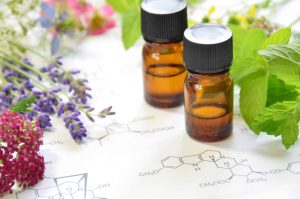
What is GC/MS testing?
Gas Chromatography (GC) is a method of separating the volatile compounds in essential oils into individual components and produces a linear graph that charts these components. Mass Spectrometry (MS) identifies each of these components and their percentages. This process is used to identify any adulteration of the essential oil tested. The precise breakdown of the chemical components in individual oils given to us by GC/MS reports is important as the therapeutic benefits and safety issues of essential oils are, in large part, determined by their chemical makeup.
Purity is essential for potency and safety
In order for essential oils to have a therapeutic effect, we do believe they must be pure plant extracts. Adulterated oils or perfume oils will not offer therapeutic effects and may in fact cause allergies, headaches, and chemical sensitivities.
As I was deep in my studies and practice of using essential oils I began to realize that testing is not all that it is cracked up to be. I’m in many professional aromatherapists and professional testing analyst circles and so there are two schools of thought on the subject. One says that testing is the assurance that you are getting a pure oil while others say it’s beyond testing for purity because testing cannot really determine the real quality of the oil. Both are seemly true statements.
GC/MS testing does not determine soil quality.
A GC/MS report does not indicate the quality or vibrancy of an oil. It typically won’t show if the oil has oxidized or if it’s a “therapeutically dead” oil. I have sampled essential oils with what looks like a “perfect” GCMS report and the oil itself was therapeutically dead, it seemed to have no life, no vibrancy, a very flat aroma. tests will not reveal the quality of the plants or soil. What I do look for is how the plants are grown, harvested and the soil quality itself. If the soil is not good the quality is not good and the smell is not up to high-quality standards. Yes, even poor quality plants distilled into essential oils can pass a test as pure. I will ask for a GC/MS report if I am unfamiliar with a farm that I deal with for the first time even after inspecting their growing practices and soil quality.
Organoleptic Testing
The term “organoleptic” means “acting on or involving the use of organs.” When talking about essential oils, the term means to examine the essential oil using sight, smell, taste, and touch.
An experienced Aroma-therapist should examine the essential oil and see if there is anything odd regarding the oil’s smell, consistency, or color.It is important to note, however, that just because an essential oil smells different than it did before, or different than another brand of essential oils, does not mean that one of them is not pure. Essential oils can smell different from batch to batch based on growing conditions, and other factors.
So it could just be poor quality growing conditions and poor soil or just overall poor quality plants. Usually, a kneen nosed Certified Aroma-therapist knows when oil is completely off which would warrant for me to have it tested to see if the chemistry makeup is right. If it is pure by test then it is certainly a poor quality oil that has all the right chemistries. Many variables contribute to the quality and vibrancy of oil, and not all of them can be measured.
Just an FYI Some people say that you can test the purity of your essential oils by putting a drop on a coffee filter and leaving it overnight and then examining the filter the next day. Supposedly if there is an oily stain in the morning your oil is likely blended with a carrier oil. This is not an accurate test, however, since the carrier oil will typically show up as a stain, but synthetic chemicals likely will not. In other words, the oil might not stain but could still be impure. And this does not give you a clue to the quality of the oil either!
GC/MS testing only tests volatile (those that evaporate rather quickly) chemicals.
Such testing can’t make allowance for whether or not a plant was grown in soil with quality nutritional components. So it necessary to know where the plants are being grown, what the soil looks like, and how it is harvested.
Along the way in my journey of study, I had heard all kinds of things about testing and certifications, some of which the oil companies made up themselves. I have seen companies get good GS/MS test results, but only to add synthetic or adulterated oil to stretch the amount of that tested oils to make a larger profit of the said passed the test oils. Several MLM companies are guilty of this practice. We won’t mention who they are.
Essential Oils Can be Adulterated in ways that GC/MS tests cannot determine. Or they can be adulterated after testing is done. Either way no single test is proof the oil is pure and is just no guarantee.
Adding synthetics: For example, if synthetic linalyl acetate is added to pure lavender oil, a GC-MS analysis cannot tell whether that compound is synthetic or natural, only that it is linalyl acetate.
Heating: Some oils are heated to burn off more “herby” smells, as with Eucalyptus Globulus or Peppermint.
Redistilling (rectification)– Some oils are redistilled to make their fragrance more appealing. I very much dislike this kind of practice. However, I do know a few oils that this practice is necessary for certain oils that highly trained Aromatherapist like working with such as Cade or known as Prickly Juniper oil.
Blending of oils to Save Money or Get Uniform Smell
An “expert” might dilute a more expensive lavender with a less expensive lavender in order to sell the less expensive oil for a higher profit.
Sometimes some might say that their oil “doesn’t smell like it did before.” That can be a good thing, because oil smell should vary a bit–depending on weather, time of year, amount of water, etc. However, sometimes oils are blended with other batches to avoid this kind of customer complaint which we do not practice either.
I would rather have my oils vary slightly in smell than have them mixed with other oils. I can distill oils from the very same garden of plants and still get a slightly different smell. Even the soil can vary slightly from one plant to another. When you buy oils directly from the producer not only do we test the sample but we also test the big batch too to make it is consistent.
Making a trip to visit the producer also will tell you volumes but not everyone can do this so this where testing is important but again the test does not tell us the whole story of the essential oil purchased. There is the need to know how the plants that make the oil are grown and harvested. The quality of the soil, where the distillery or farm is located, and even how it is harvested and processed are important. Knowing the ethics of the owners and how much they value their product will tell you so much more beyond what a test can do.
While I do know and do firmly believe that testing is important because I also rely on these tests from time to time, there is a lot of other things that are just as important. If you like the science and find it fascinating, a GC/MS report can deepen your relationship with the oils you work with. That being said, never ever reduce oil to just their components because oils are more than that!.
There are hundreds and hundreds of components in essential oils and there is only documented scientific research on about 60 or so. So there is magic in the synergy of the complexity of how the components support and work together. It is a grave injustice to the plant or tree to reduce the essential oil to the components.
Here are the things that I recommend you look for in an oil company:
Signs of a Quality Essential Oil Company
1. Experience in the field of Aroma. A certified and knowledgeable person running the company and has years of experience.
2. Purity by smell, color, and feel of the oil. You must have knowledge of what the organic form smells like as well what color it should look like how it dries and how it feels. Learn the difference what oils adulterated feel like next to a pure Essential oil feels like.
3. Plants were grown in indigenous or remote locations. This is very important.
4. Organic and/or wild-crafted when available.
5. Most plants are grown in remote locations where no pesticides, herbicides, or harmful chemicals are used and only natural fertilizers are used.
5. Reasonable shipping prices. We try to use a flat rate but that can change depending on the size of the order and which country it will ship to.
6. Reasonable pricing.
7. Safety Guidelines are clearly listed on the website and easy to find or can request a copy.
8. No artificial oils sold. Pure essential oils should have the organic material of the essential oil in its Latin name listed clearly on the bottle.
9. No adulterating (no heating, blending, adding, or further distillation of oils) to enhance single oils. Example Stay away from a company that sells Lavender 40/42 which is a standardized oil used in the perfume and fragrance industry. It is primarily used for soap and candle making. This product is not for therapeutic use and is enhanced with synthetics.
10. Sourced from Small Farms and privately owned distilleries is nice too. We do distill much of our own oils as much as possible.
11. Common Sense Approach to oils – no “recommending” of digesting internally use of oils and reasonable caution in overall use of oils.
12. Not a multi-level marketing company. Aytz Chayim is a company that sells oils that are directly from several private and non-private growers and farmers to the consumer. We also distill as much of our own oils as much possible which is why I travel a lot between the US and Israel. We are building the Holy Temple not the Pyramids!
13. Owner is a Certified Aromatherapist from a reputable School or highly skilled Aromatherapist teacher. A person with certification is someone who can help service their Community and Consumers in holistic care better than a poorly trained or not trained at all rep or salesperson can do. Someone who is certified knows safety and precisely better how to properly use essential oils. There are a few High-Quality Good Companies out there that have a non-certified owner but that too is rapidly changing.
My Personal education even though I am a Certified Clinical Master Aroma-therapist and have over 1200 hours of study my education does not just stop there because I do seek out learning from some of the Master Aroma-therapist who have been in the field for over 35-40+ years. So my education is ongoing and in the aromatherapy/herbalist world this is almost mandatory.
Look beyond GS/MS testing for purity. While I do like these tests to know the chemistry of the oil, these tests do not completely tell the story of the oil. Look for quality too. There are other ways to tell if an oil is good or not. Take a look at the company. What values do they hold in their product and what values do the owners personally have?
___________________________________________________________________________
Disclaimer: Any companies or products mentioned in these educational videos we at Aytzchayim Aroma do not endorse, work for, or have purchased from. These videos were selected because the individual Educators are highly respected in their field of Chemistry Education.
See how GS/MS testing is done by Dr. Pappas at Essential oil University.
Edit Update Dec 2019: See this video lecture on Spotting Adulterated Essential Oils with GC, Dr. Kevin Dunn professor of Chemistry at Hampden-Sydney College.
Book Suggestions:
Essential Oil Safety by R. Tisserand and R. Young
Chemistry of Aromatherapeutic Oils 3rd Edition E. Joy Bowles