

Description
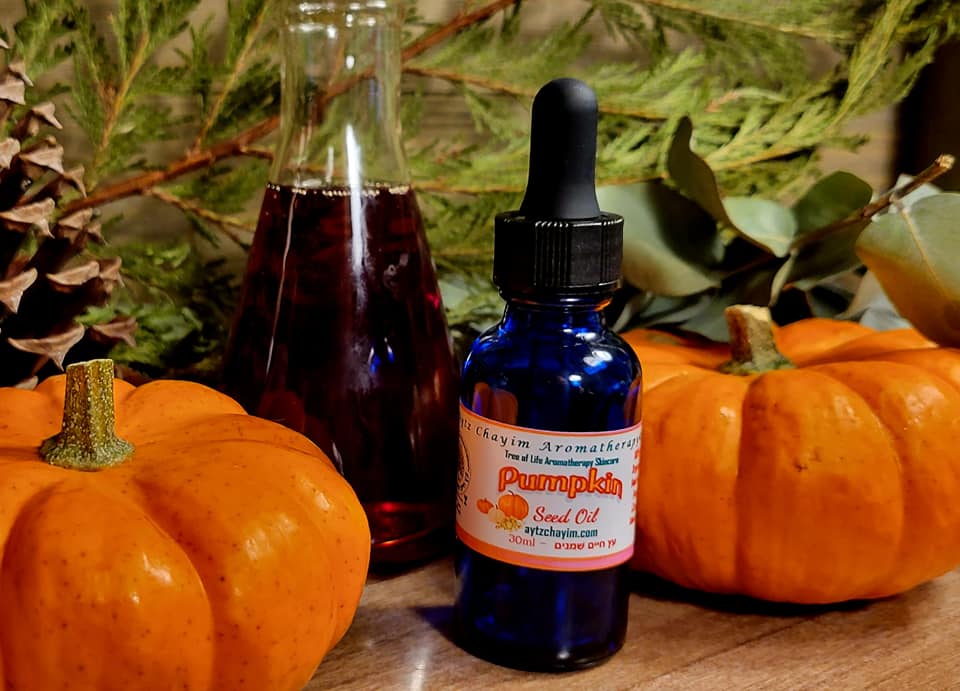
Pumpkin seed oil 30ml
Cucurbita pepo
Cold Pressed Seeds
Israel
OW
Organic, cold-pressed & unrefined.
Hair care, skin care, food supplement, relaxing, ease tired tight muscles and joints, anxiety, stress relieving and lowers body inflammation and increase circulation
Fatty Acids
Oleic- less than 23%
Linoleic- less than 57%
Palmitic- less than 13%
Stearic- less than 4.5%
Gourds were used in the Holy Temple Design by King Solomon
I Kings 6:18-20 The inside of the temple was cedar, carved with gourds and open flowers. Everything was cedar; no stone was to be seen. He prepared the inner sanctuary within the temple to set the ark of the covenant of the L-rd there.
I Kings 7:23-26 He made the Sea (Laver of water) of cast metal, circular in shape, measuring ten cubits from rim to rim and five cubits high. It took a line of thirty cubits to measure around it. Below the rim, gourds encircled it—ten to a cubit. The gourds were cast in two rows in one piece with the Sea. The Sea stood on twelve bulls, three facing north, three facing west, three facing south and three facing east. The Sea rested on top of them, and their hindquarters were toward the center. It was a handbreadth in thickness, and its rim was like the rim of a cup, like a lily blossom. It held two thousand baths.
Interestingly to note in the middle east those who could not afford a drinking cup made of silver, clay, etc would often use seasonal growing gourds to drink from thus may be the reason gourds were used in the design of Temple’s vessels. The Gourd was often used during the fall season and holidays. Some were decorated especially for the occasion of holidays.
The inner parts of gourds were made into a stew and the outer shell was used to drink seasonal wines, and to hold honey and fruits. Also used as plates and bowls as well as musical instruments. There are some Roman documents that say Israelites used large gourds as beehive boxes to pollinate their fruit trees. (See Mishnah texts Sheviit 1:7 in Talmud)